Start with the problem, not a guess
A repair conversation is most useful when it starts with what has changed. Does the gate drag, has a connection moved, or is a section visibly damaged? A wide photo shows the setting, while close-up images help identify the area that needs attention. Describe when the issue began and any earlier work you know about.
Photos can help us understand the request, but they cannot establish the condition of every connection, support, or hidden surface. Some projects need an in-person review before a repair approach can be discussed. If the metalwork feels unstable, keep people away from it until the condition has been assessed.
Repair, replace a section, or plan new work
Repair and replacement are different scopes. The best next step depends on the extent of damage, the condition of the surrounding material, and the intended use. Tell us if your priority is restoring the existing appearance, addressing a specific issue, or considering a new design altogether.
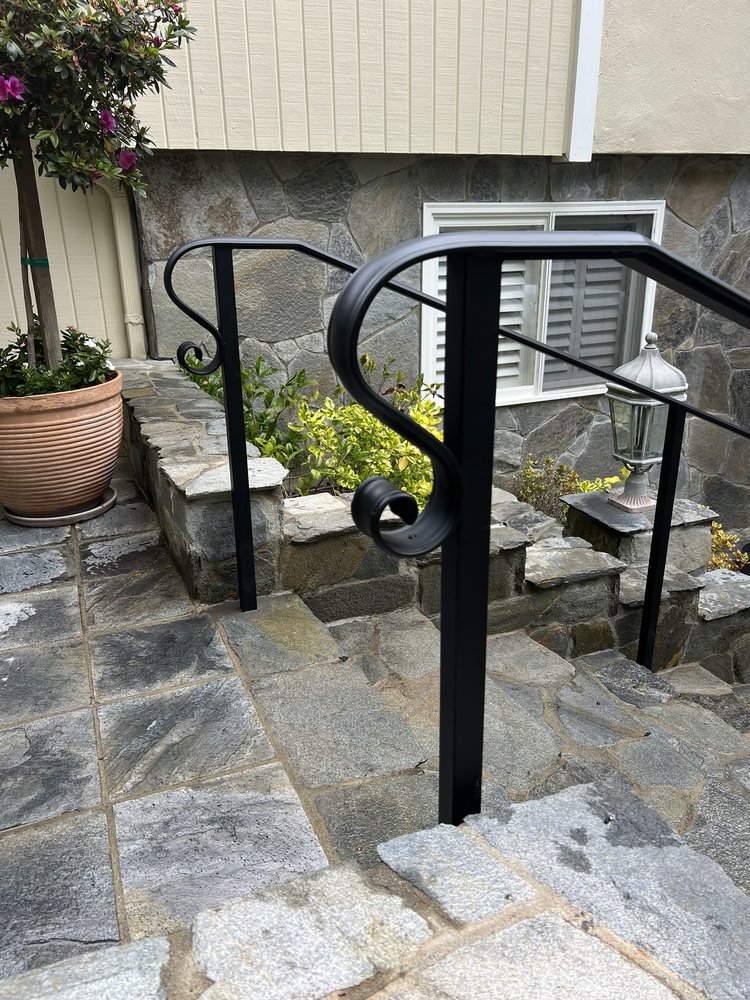
We can discuss iron gates, railings, fencing, and custom metalwork. If your request involves a gate motor, electrical equipment, or another specialist system, identify that clearly. A metalwork repair does not automatically cover those components. The finished handrail photo here is an example of our fabrication work, not a before-and-after repair claim.
Make the estimate conversation useful
Include your city, photos of the entire item, and close-ups of the problem. For a gate, show the hinges, latch, and surrounding posts or walls. For a railing or fence, include the attachment areas and adjacent sections. If you have approximate dimensions, those are helpful too.
The estimate depends on the work required, access, materials, and the condition found on review. We will discuss the proposed scope rather than assuming a quick patch is suitable. If replacement is the better direction to explore, our gate and railing pages provide examples of design options.