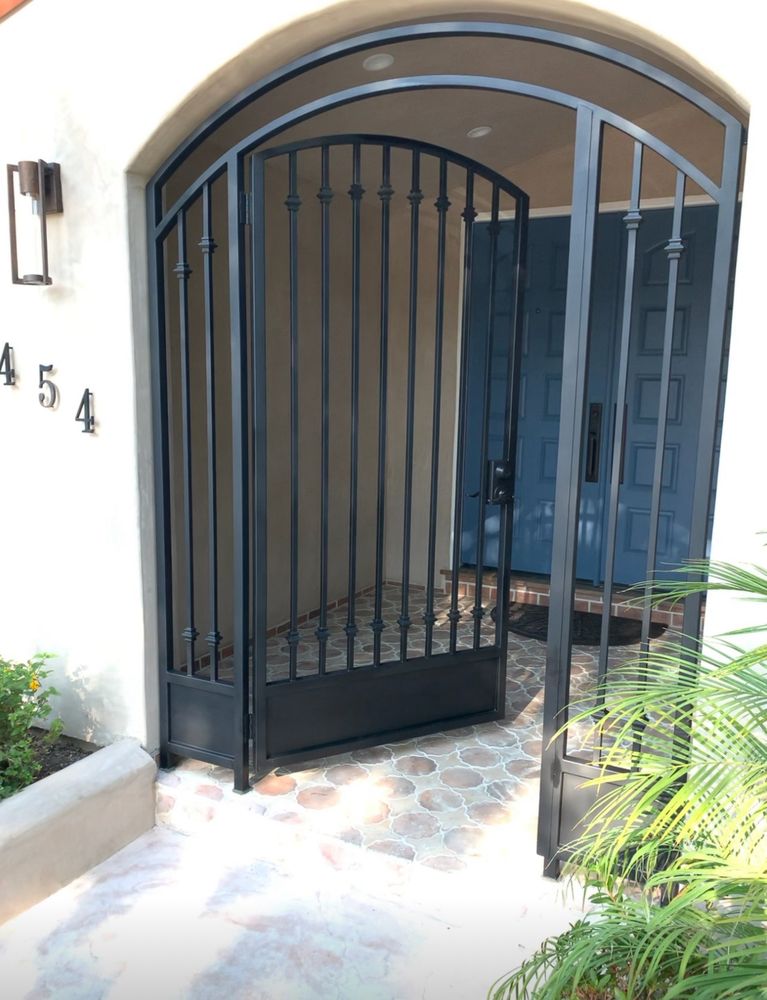
Small entrances deserve thoughtful details
A pedestrian gate is used at close range every day. Its proportions, handle placement, and relationship to the surrounding walls influence both the appearance and the experience of moving through it. An arched opening creates a different impression from a straight-lined slatted gate or a decorative garden pattern.
Our portfolio includes examples of all three approaches. Share the one that is closest to your taste, or send your own inspiration photo. We will discuss how the design could relate to your entrance, including the available opening, nearby landscaping, and the existing architecture.
Balance access and the look you want
Think about how the passage is used before settling on a style. A front walk, side yard, and garden path may have different clearance needs. If bins, tools, or larger items need to pass through, mention that early. The design discussion should include the everyday use of the opening as well as its appearance.
Photos of the entrance from both sides are helpful. Include the walls or posts, the ground level, and anything that could affect the gate's movement. If you are replacing an existing gate, photograph the hardware and mounting areas so we can see the current arrangement.
Coordinate with your broader project
A pedestrian gate can be a standalone improvement or part of a larger fence or driveway project. Matching the finish and repeating a few design elements can help the metalwork feel connected. Exact replication of old components depends on their details and condition, so we will need to review those before confirming the scope.
A free estimate begins with your city, approximate opening size, project photos, and preferred design. Complexity, finish, hardware, and installation requirements affect the proposal. Final dimensions and mounting details need to be confirmed before the gate is fabricated for the space.